

Turning EU critical raw materials ambitions into industrial reality – Elmery at IPMI 2026
Date:
Category:
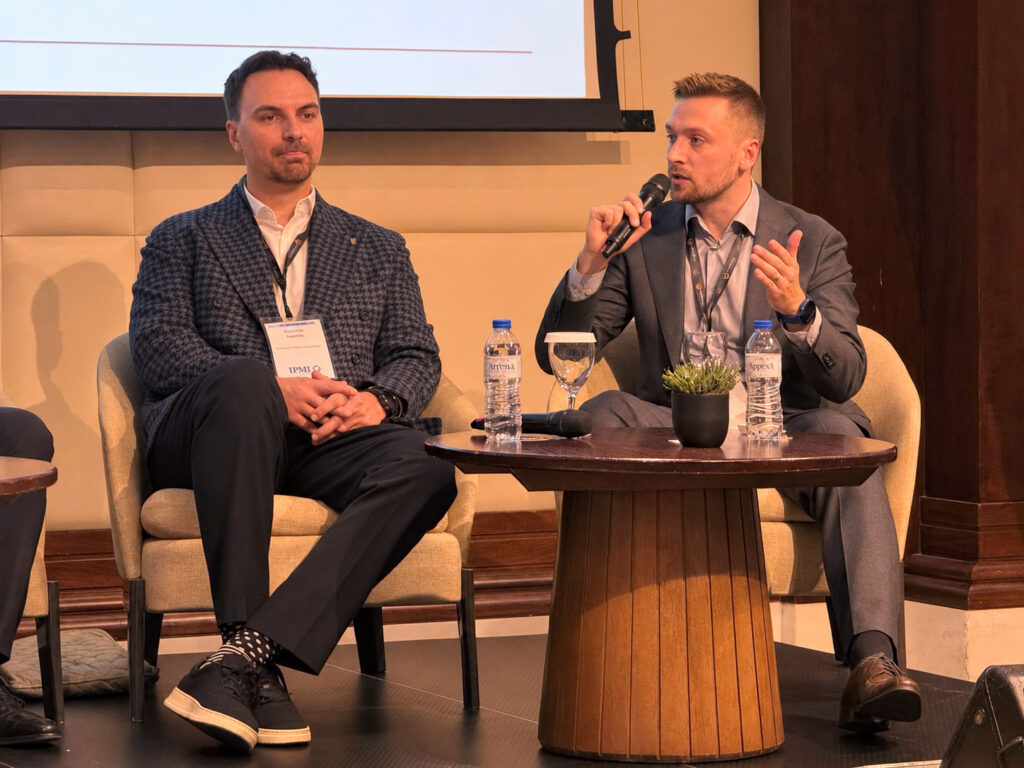
Elmery participated in the European Chapter of the International Precious Metals Institute (IPMI) Annual Seminar, held in Athens, Greece, on 15–17 November 2026. Under the theme “Precious Metals in an Age of Uncertainty,” the event brought together industry leaders and experts to discuss market developments, supply security and the future of the precious metals industry.
Elmery’s Sales Director, Kim Kavander, delivered a presentation titled “The Role of European Innovation in Building More Resilient Critical Metals Value Chains” and joined the subsequent panel discussion as part of the session “Building Resilience Across Trading, Production, and Supply Chains.”
From European policy to industrial opportunity
Europe’s dependence on imported critical raw materials presents a challenge for industrial competitiveness and supply security. The EU’s Critical Raw Materials Act (CRMA) sets ambitious targets for 2030, including increasing European processing and recycling capacities.
For precious metal refiners and recyclers, these objectives present a concrete opportunity. Recovering more valuable metals from existing process streams, improving process efficiency and reducing resource consumption can simultaneously strengthen European supply resilience and improve industrial profitability.
EU funding initiatives, including the European Innovation Council (EIC), EIT RawMaterials and Horizon Europe, can help bridge the gap between technological innovation and industrial implementation.
Collaboration as a pathway to industrial innovation
A central message of Elmery’s presentation was that industrial companies do not need to develop every new technology themselves.
By collaborating with innovative technology providers and research institutions, refiners and recyclers can access new capabilities while reducing the technical and financial risks associated with process development.
Industrial partners bring real-world process challenges, operating requirements and opportunities for implementation. Technology companies contribute innovative solutions, while research institutions provide scientific expertise. EU support can help these partnerships progress from laboratory validation through industrial piloting towards commercial deployment.
One example highlighted during the presentation was the collaboration between Elmery, Aalto University and Aurubis, supported by EIT RawMaterials. The project combines scientific research, industrial expertise and Elmery’s selective electrochemical metal recovery technology to advance the development and demonstration of improved recovery processes.
Elmery’s own EIC Accelerator project provides another example of how European innovation funding can support the scale-up of promising technologies towards full industrial application.
Building resilience through industrial innovation
The discussion in Athens highlighted the importance of connecting Europe’s strategic ambitions with practical improvements across the metals value chain.
For refiners and recyclers, the starting point can be as straightforward as identifying a process stream where valuable metals are lost, recovery could be improved or existing treatment methods could be made more efficient.
With the right technology partners and funding mechanisms, these challenges can become opportunities for collaboration, process development and long-term commercial value.
Europe’s critical metals resilience will be forged through innovation in refining, recovery and recycling.