
When resin capture is not enough for complex metal recovery.
Ion exchange is a proven way to capture metals on resins, especially in purification and polishing circuits. Elmery’s EDRR is different: it targets already-dissolved metals with pulse-based electrochemistry, reducing the need for resin handling, regenerating chemicals and multi-step processing when the real problem is selective recovery from complex liquid streams.
Author:
Petteri Halli, CTO
Date:
Category:
EDRR vs
Ion Exchange
Ion exchange (IX) has earned its place in hydrometallurgy. It can capture selected ions from solution, polish process streams and concentrate valuable metals before a downstream recovery step. In the right chemistry, it is fast, familiar and useful.
The challenge appears when the stream is not clean, stable or simple. Real side streams and bleed streams often carry competing ions, changing acidity, oxidants, organics or impurity spikes. Then the resin is no longer only a capture tool. It becomes another consumable system that must be protected, regenerated, stripped, washed, monitored and eventually burned and replaced.
That is where EDRR should be part of the comparison.
What ion exchange is usually needed for
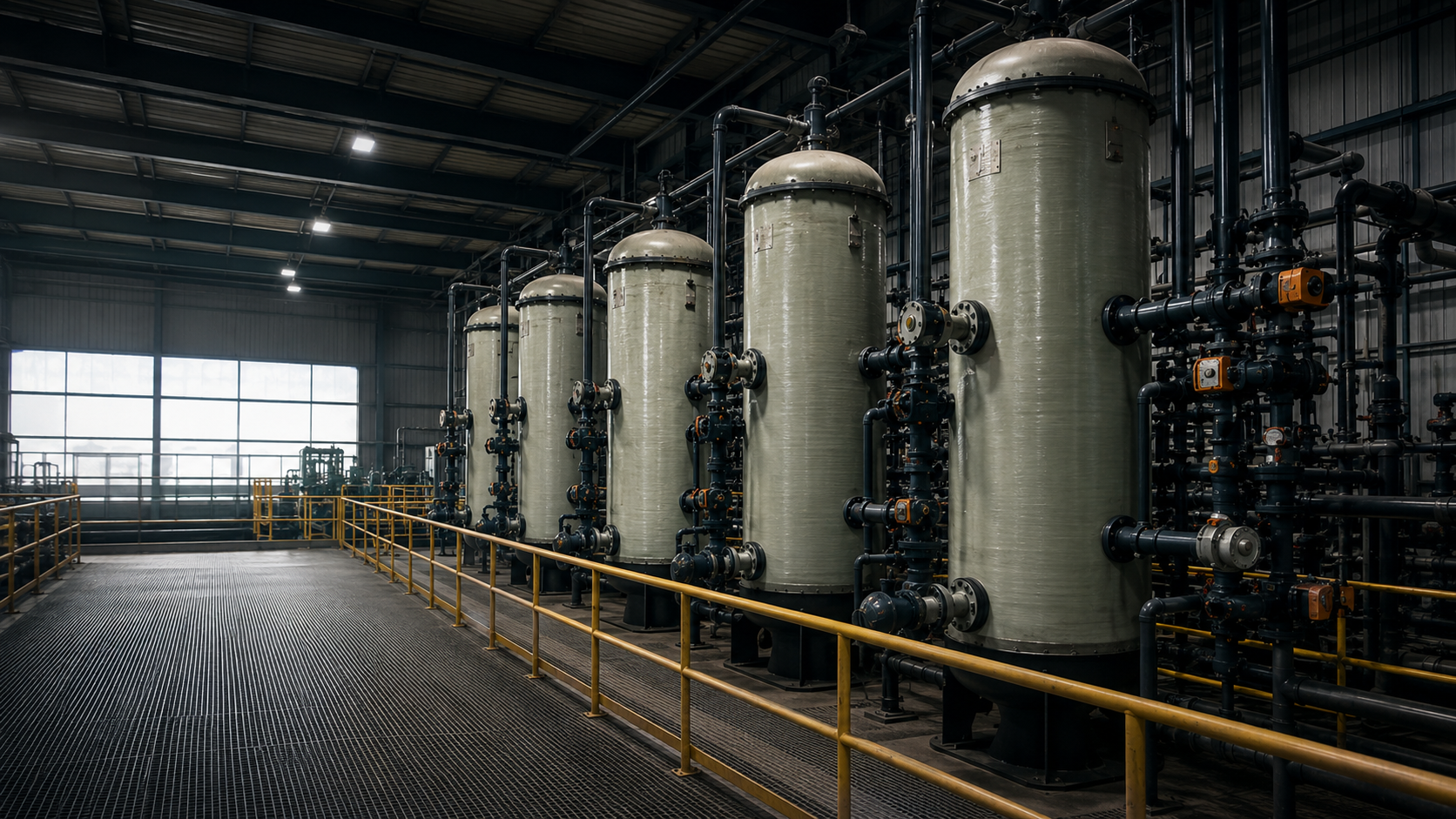
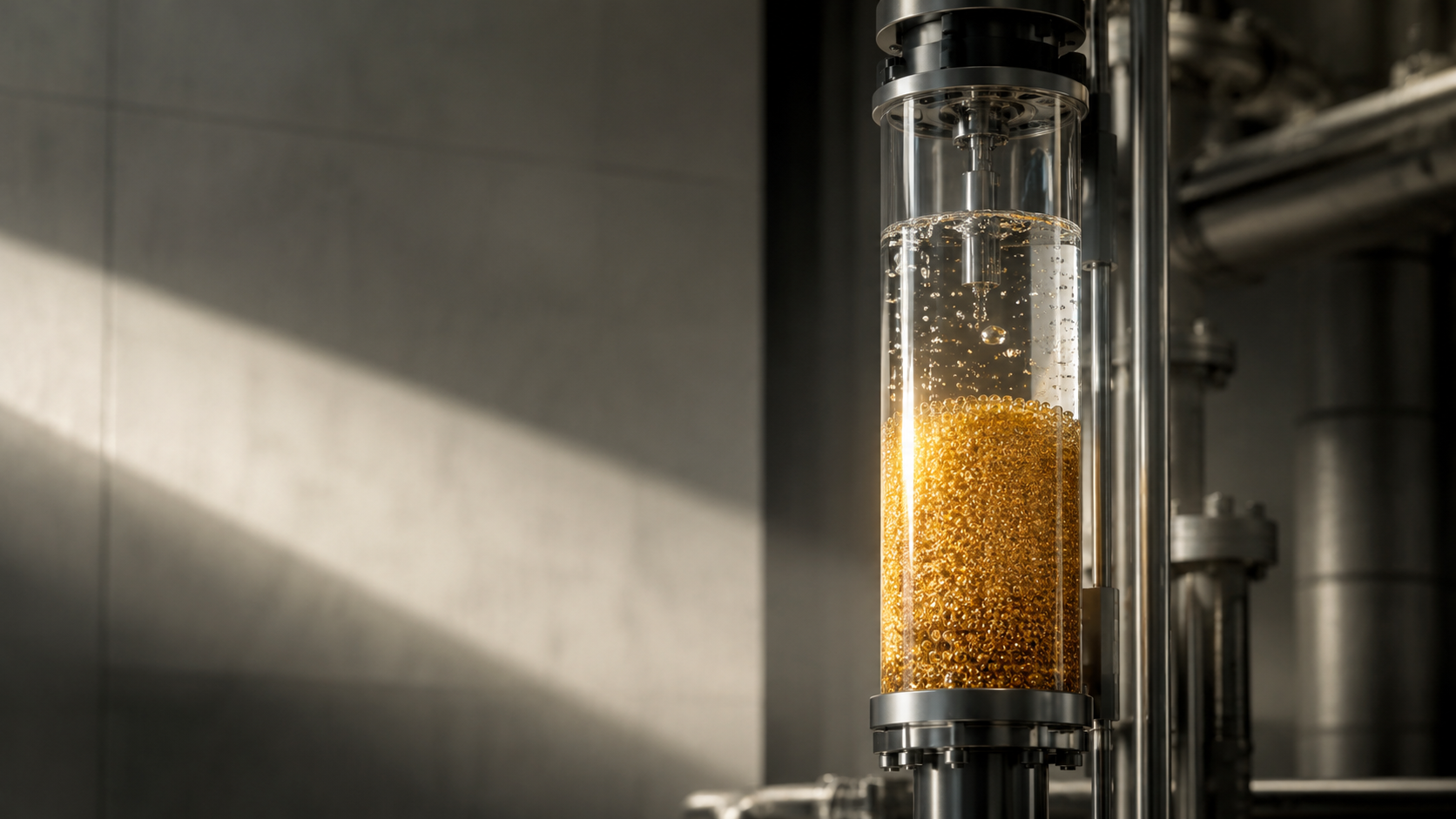
Ion exchange is typically used to separate or purify dissolved species by passing the solution through a resin bed. Target ions attach to functional groups on the resin. Later, the metals are extracted with acids and afterwards the loaded resin is regenerated or eluted so the target metal can be recovered in another unit operation.
For stable, well-characterized solutions, this can be a strong choice. It can be especially useful when the task is polishing, trace capture or producing a more concentrated eluate for a downstream process.
Where the resin route becomes harder
- Selectivity depends heavily on chemistry, pH, competing ions and resin choice.
- Regeneration and extraction introduce more chemicals, more handling and more wastewater.
- Loaded resins can become operational bottlenecks when feeds vary or foul the bed.
- Recovering the metal still requires a downstream step after extraction– increasing the complexity, maintenance and cost of operation.
- The resin itself becomes a cost, maintenance and end-of-life consideration.
None of this makes ion exchange a bad technology. It simply means the question should be sharper: are you trying to capture ions temporarily on a resin, or are you trying to recover target metals from a difficult dissolved stream with fewer intermediate steps?
How Elmery’s EDRR compares to ion exchange
Elmery’s EDRR technology, Electrodeposition Redox Replacement, is a pulse-based electrochemical recovery step. Instead of moving the target metal onto a resin and then stripping it back into solution, EDRR uses controlled electrical pulses to drive selective accumulation of target metals directly on designed electrode surfaces. The recovered product can then be handled in the agreed format for refining or reuse.
The practical difference is control. Pulse parameters can be tuned to favor target metals and suppress unwanted co-deposition within the agreed operating window. When feed composition drifts inside that window, the process can be adjusted electrically rather than by changing the resin or the whole chemistry of the stream.
| Question | Ion exchange | Elmery EDRR |
|---|---|---|
| Best fit | Polishing, purification and selective capture on resins. | Selective recovery or impurity removal from already-dissolved metal streams. |
| Main input in addition to the solution itself | Resin, regenerant and extraction chemistry. | Electricity and tuned process parameters. |
| Operational burden | Resin loading, stripping, washing, replacement and waste handling. | Simple operation with Elmery-defined parameters and validated operating windows. |
| Complex feeds | Can work, but competing ions and fouling can reduce efficiency. | Built for difficult, impure and multi-metal streams when targets are electrochemically suitable. |
| Output logic | Loaded resin or extracted metals need a second unit operation where the metals are recovered. | Target metals accumulate directly on electrodes in a single step. |
When EDRR may be the better solution
Consider EDRR when ion exchange struggles with selectivity, resin regeneration, chemical use, variable process chemistry, or when valuable metals remain in side streams.
Ion exchange can introduce dependency on consumable resin supply chains, including country-of-origin, replacement lead times, regeneration chemicals, and resin-specific supplier availability. For some specialty applications, supply-chain exposure can become a commercial and geopolitical risk.
Ion exchange performance depends on resin availability, resin chemistry and regeneration logistics. In today’s geopolitical environment, buyers increasingly need to understand where their consumables come from and whether replacement materials are available from qualified alternative suppliers.
Typical use cases for EDRR include precious metal refinery side streams, PGM-bearing chloride or ammonia systems, base-metal bleed streams, impurity-sensitive circuits and complex recycling solutions where dissolved value remains but conventional steps are too broad, too slow or too chemical-heavy.
When ion exchange may still be the right choice
If the feed is clean, dilute, stable and already well matched to a resin, ion exchange may be efficient and economical. If the plant already has a reliable resin circuit and the target is a classic polishing duty, replacing it may not be the right first move.
Elmery is not here to pretend every existing unit operation is wrong. The better question is where single selective electrochemical step can recover more value or remove the problem species earlier, before the rest of the process pays for it repeatedly.
The practical test
A sample tells the truth faster than a debate. Elmery starts by understanding the liquid stream: composition, pH, temperature, target metals, interferents and operational constraints. From there, we define a lab test and pilot path around one real stream.
No chemicals. Fewer steps. More control. That is the point of comparing EDRR to ion exchange.
FAQ
- Can EDRR fully replace ion exchange?
Often yes, but replacement is not the default assumption. EDRR is often evaluated as an add-on or alternative for the specific stream where resin handling, regeneration chemistry or selectivity limits performance. - Does EDRR work if metals are not dissolved?
No. EDRR works on liquid streams where the relevant metals are already dissolved. Solid residues need a leaching step first. - Can EDRR replace ion exchange?
Often, yes. When ion exchange is used to recover valuable metals, remove impurities or control metal content in a side stream, EDRR can often take over the duty with a simpler, electricity-driven process. In some flowsheets, however, the best solution is not replacement but combination: ion exchange may still be useful for polishing or separation, while EDRR handles the higher-value recovery or impurity-control step.

Let’s talk.
No chemicals. Faster recovery.
More metals from any concentration.
Engineered to make complex recovery simple.